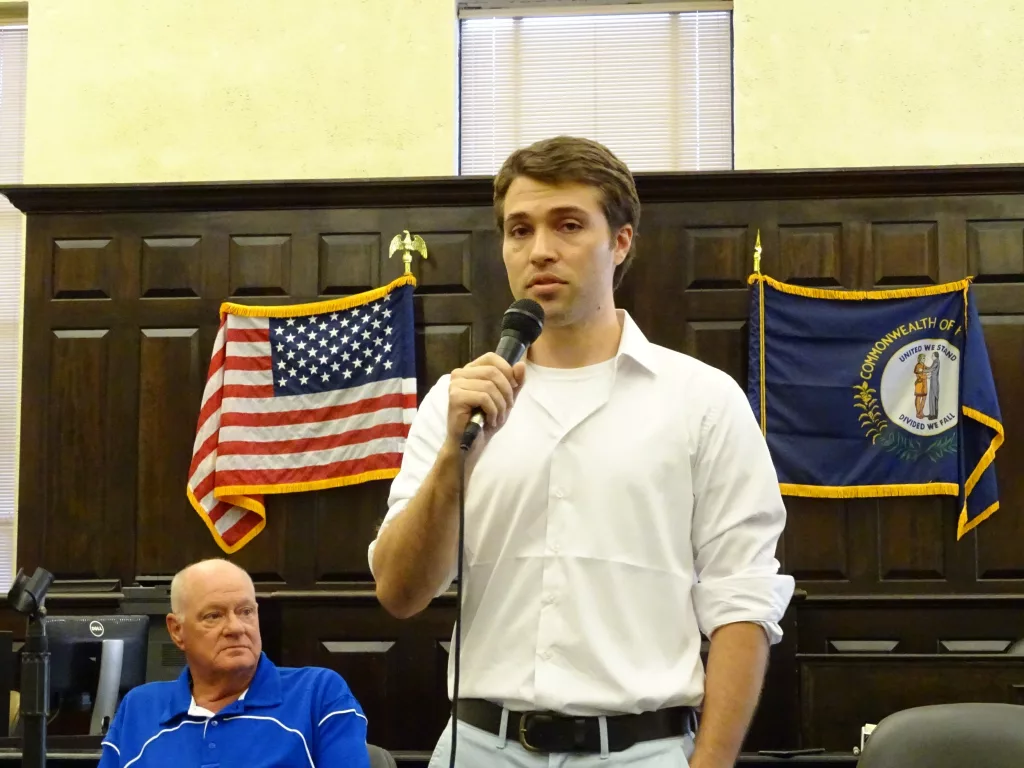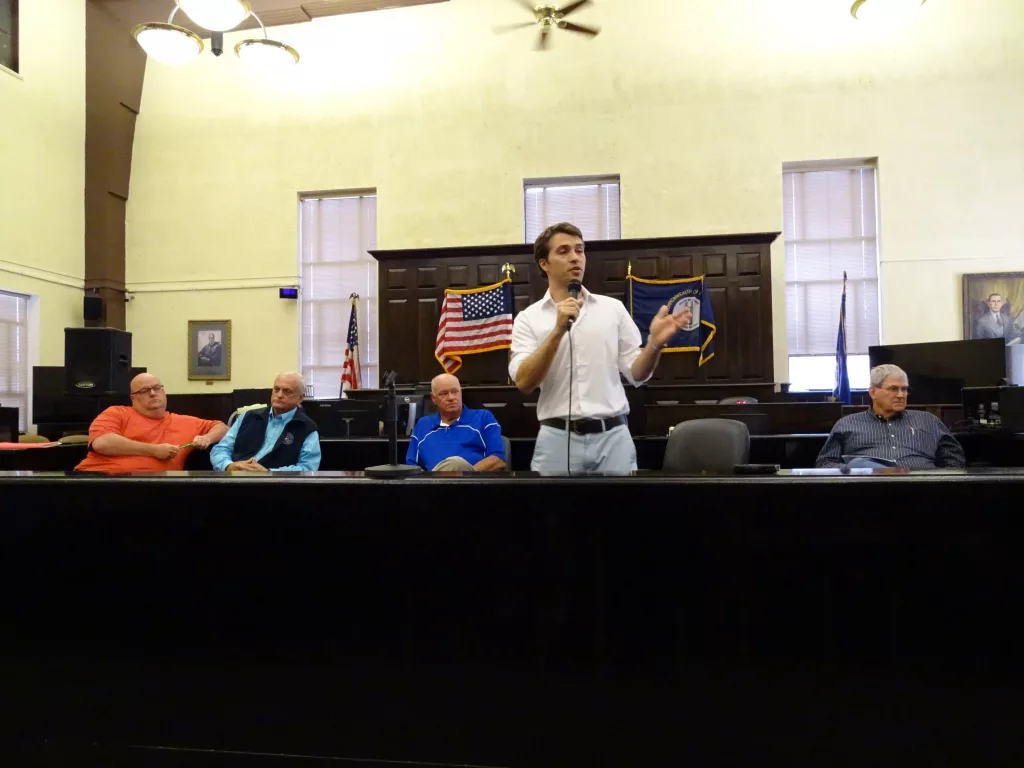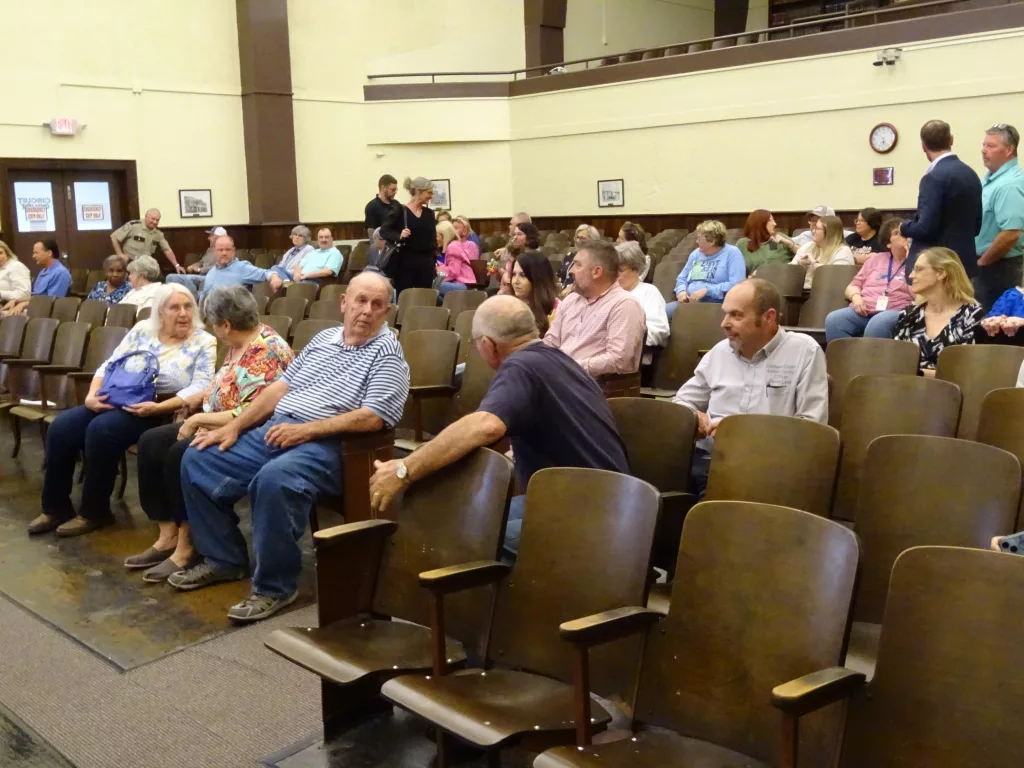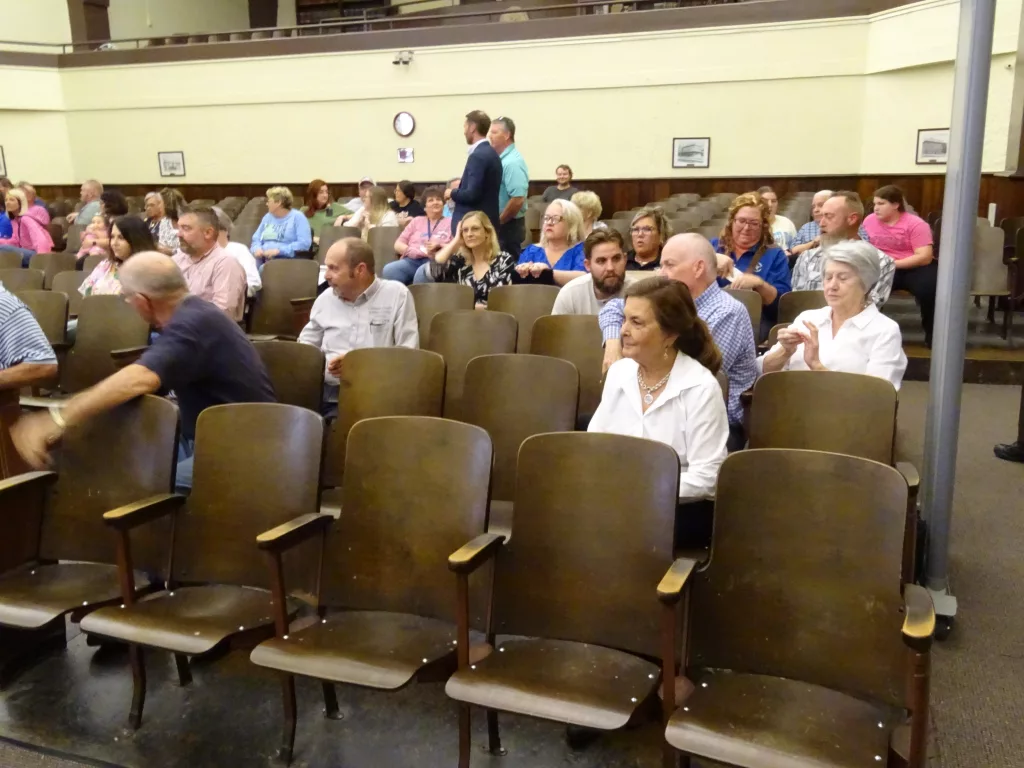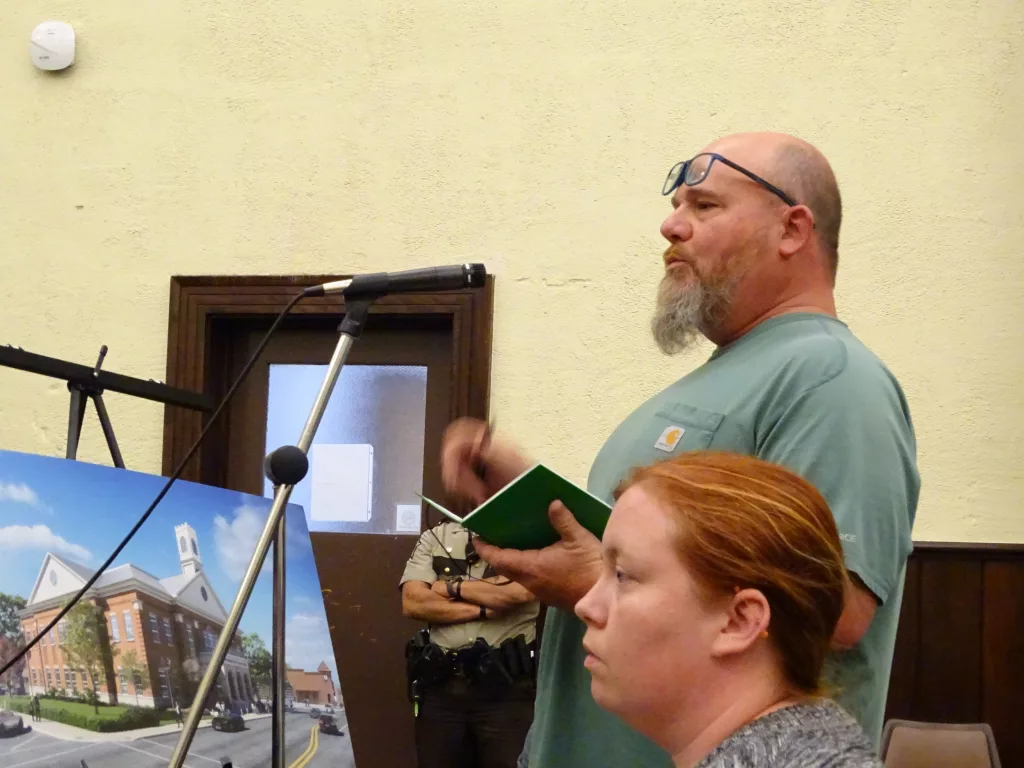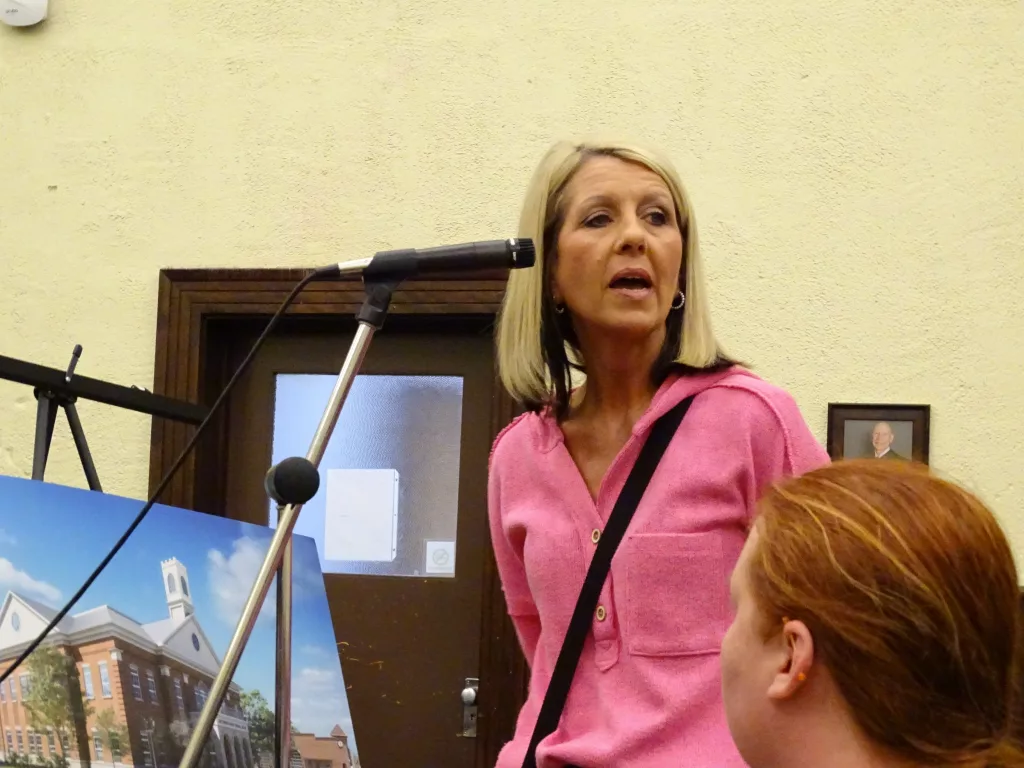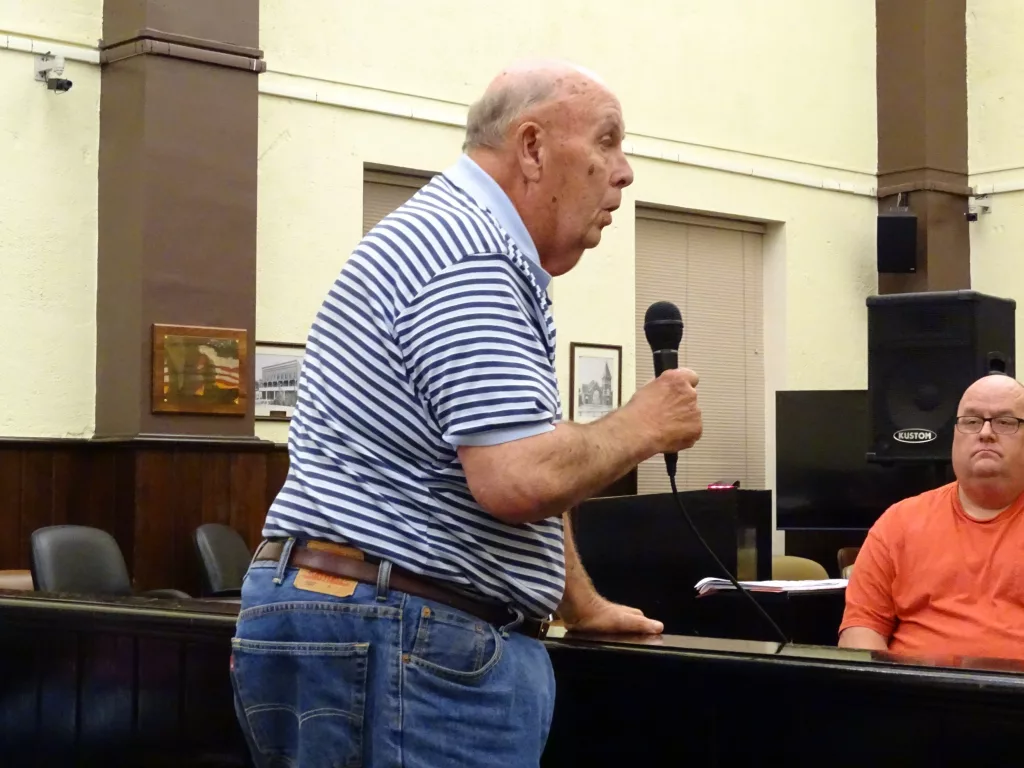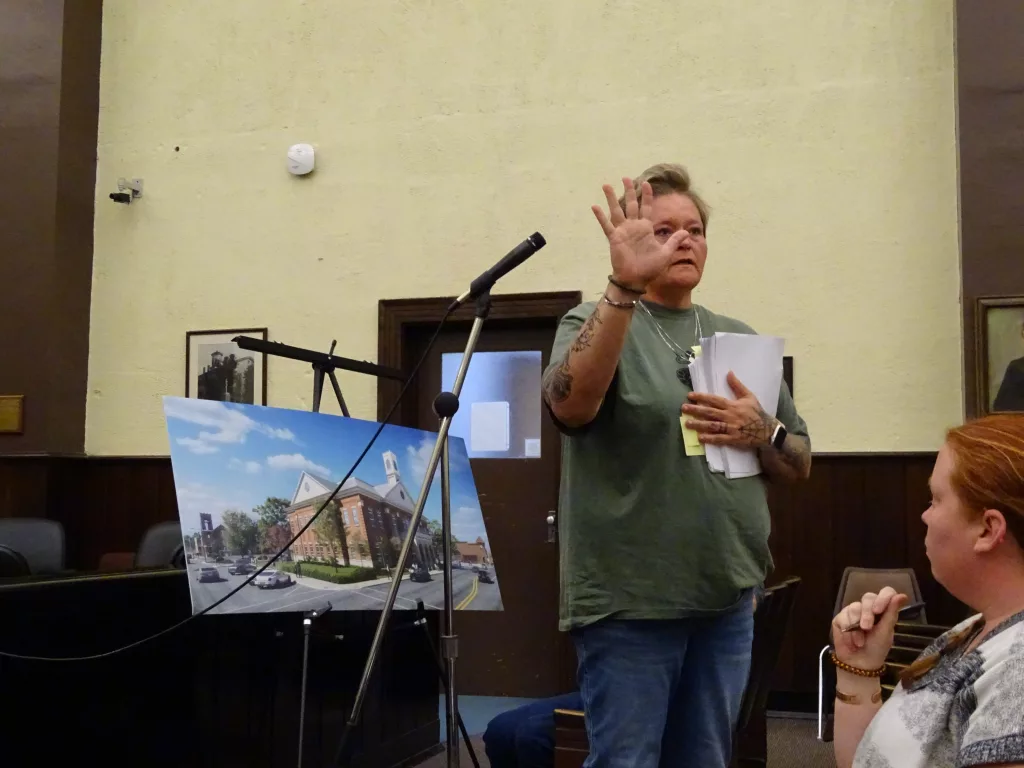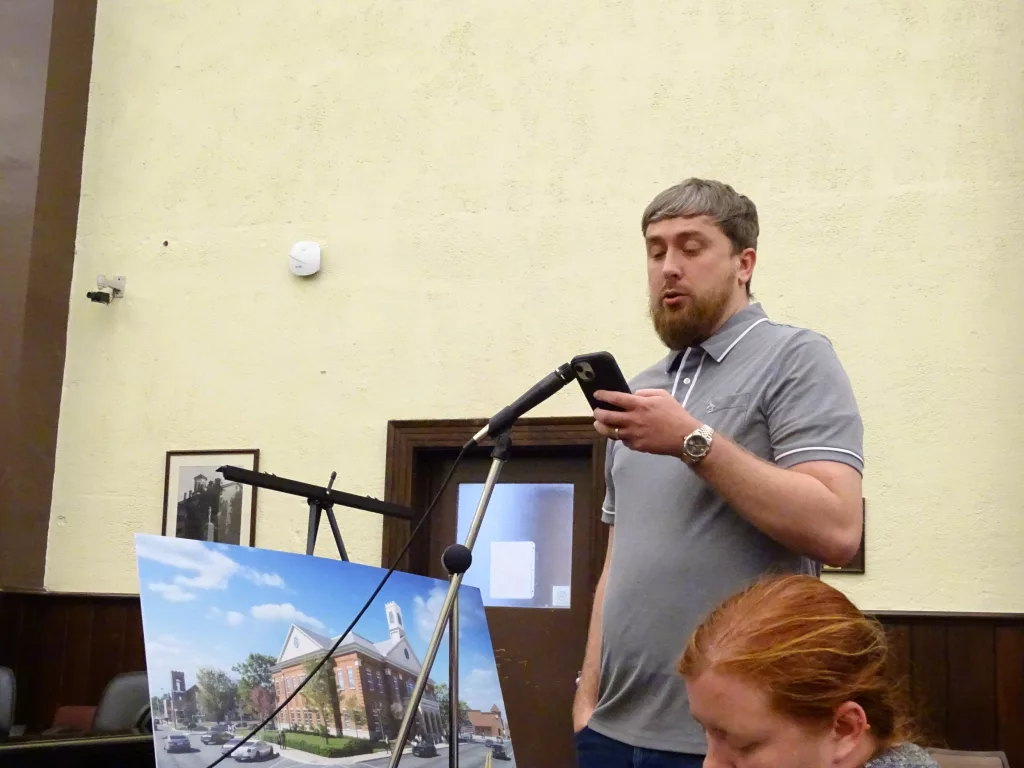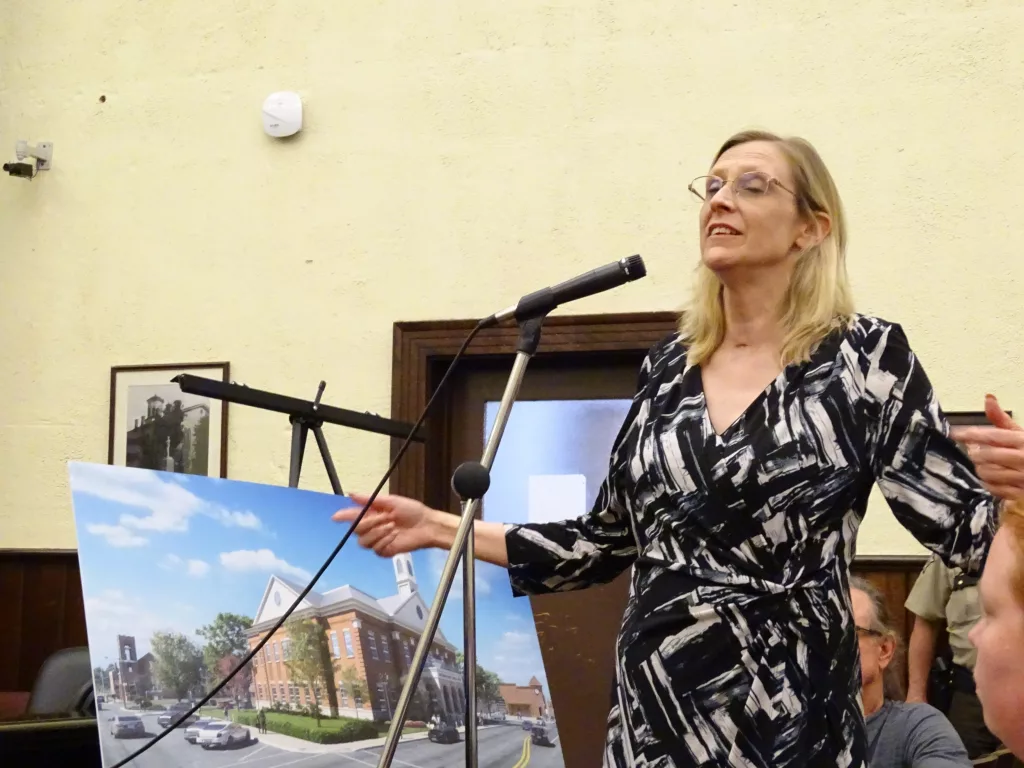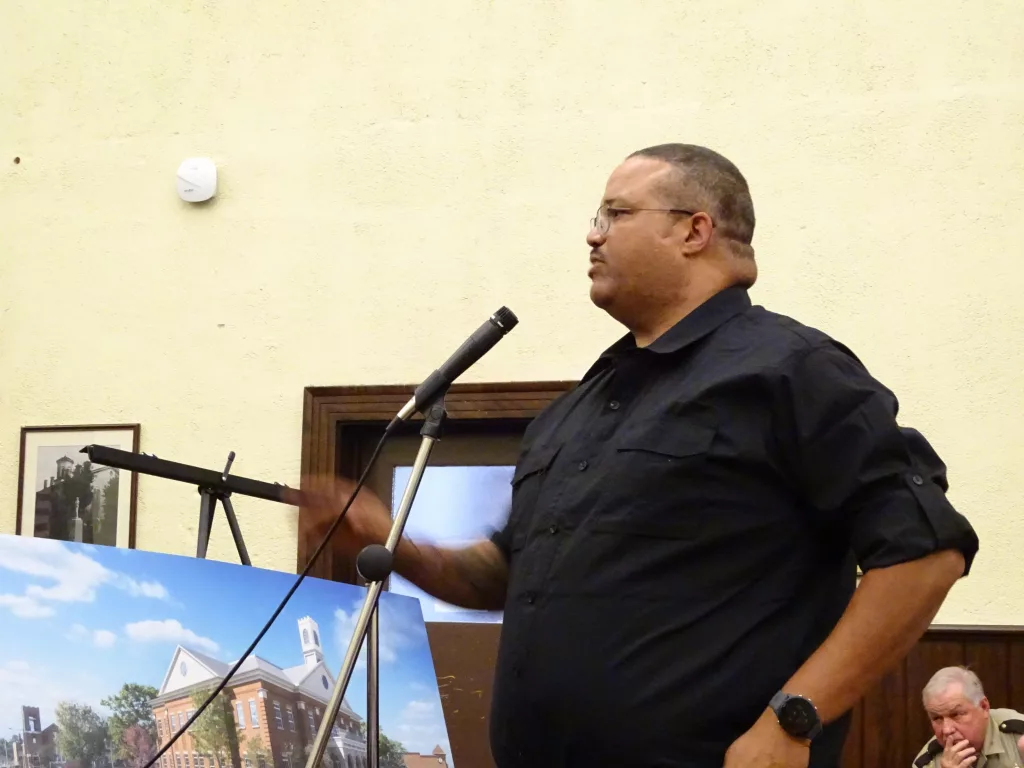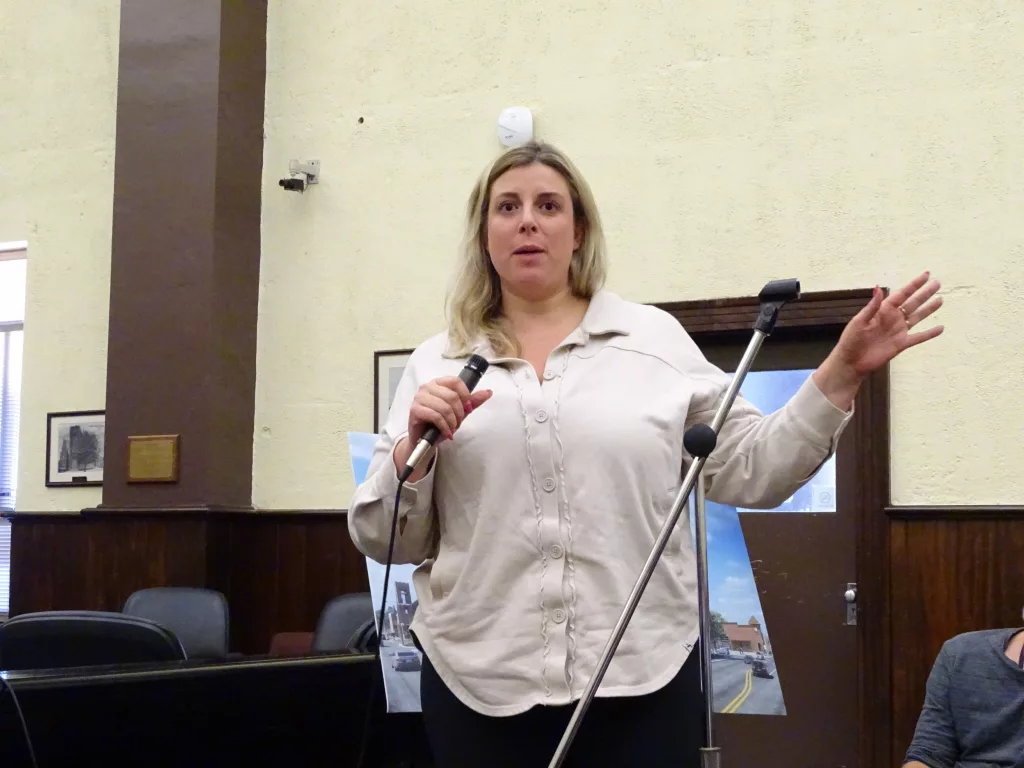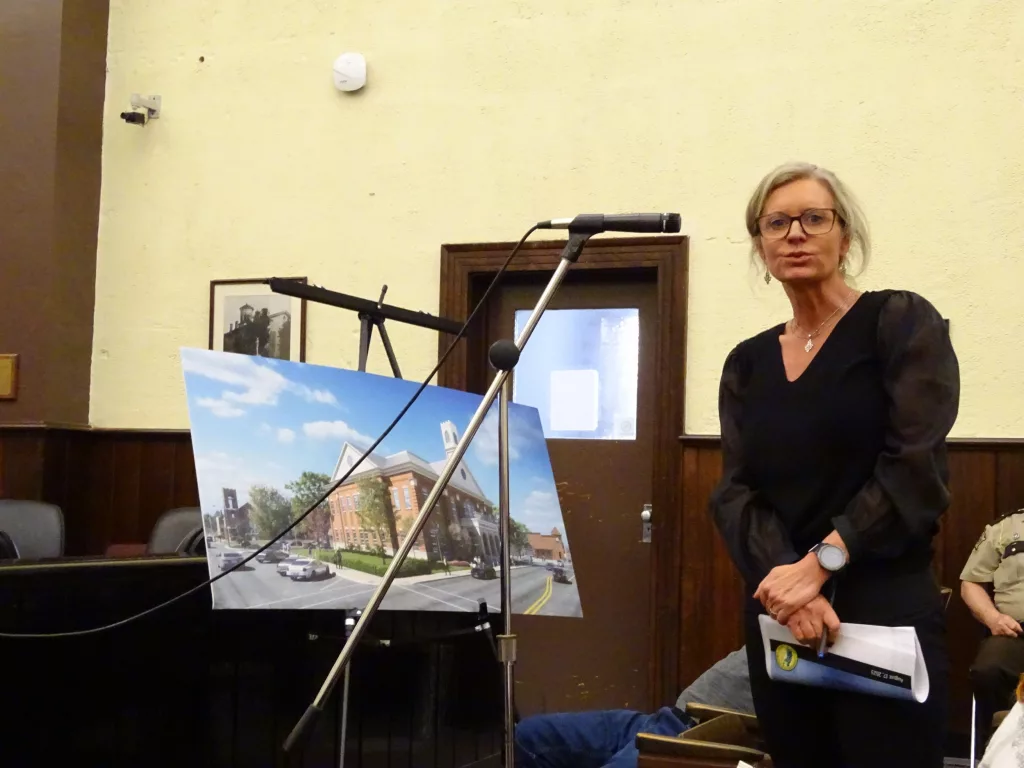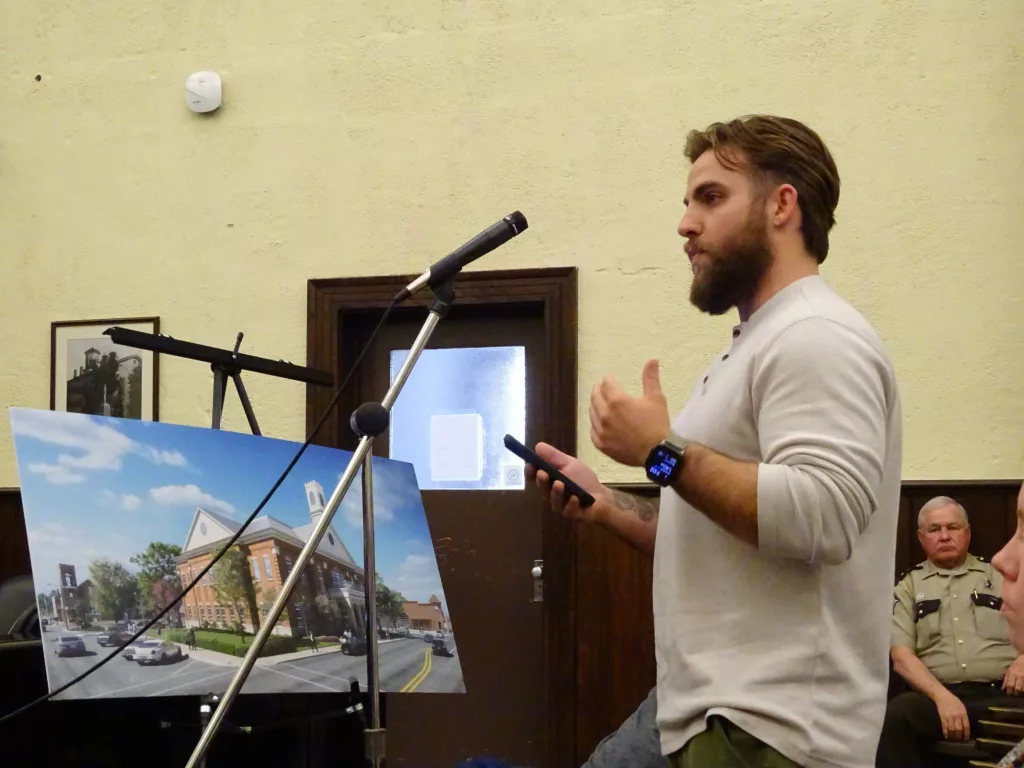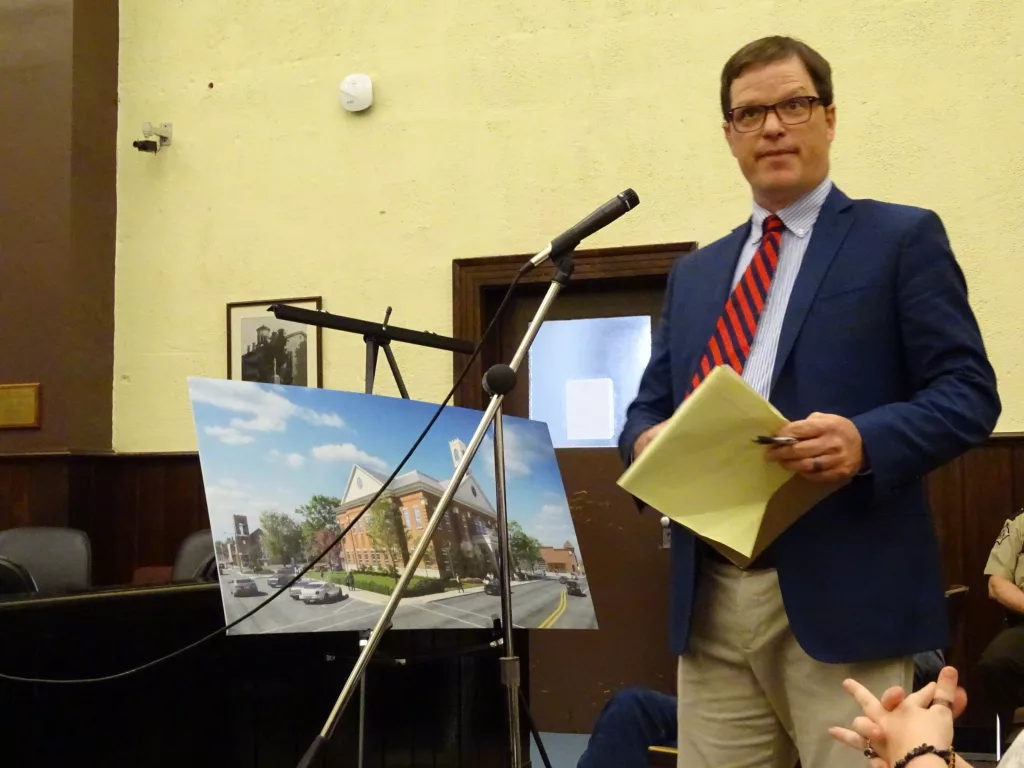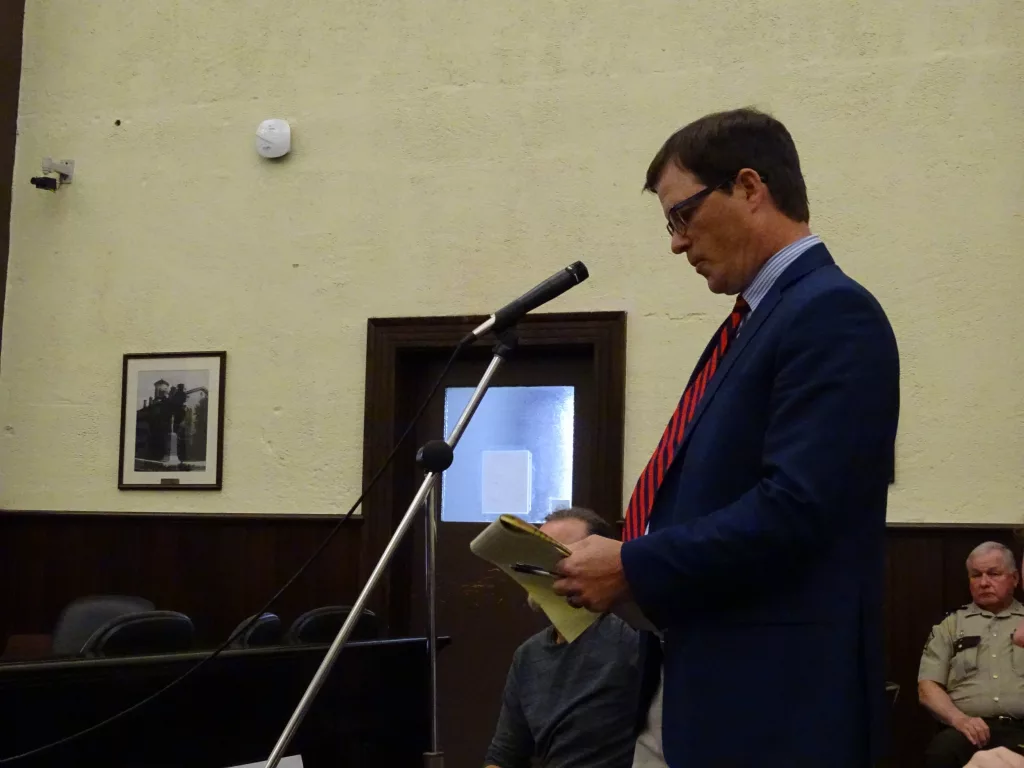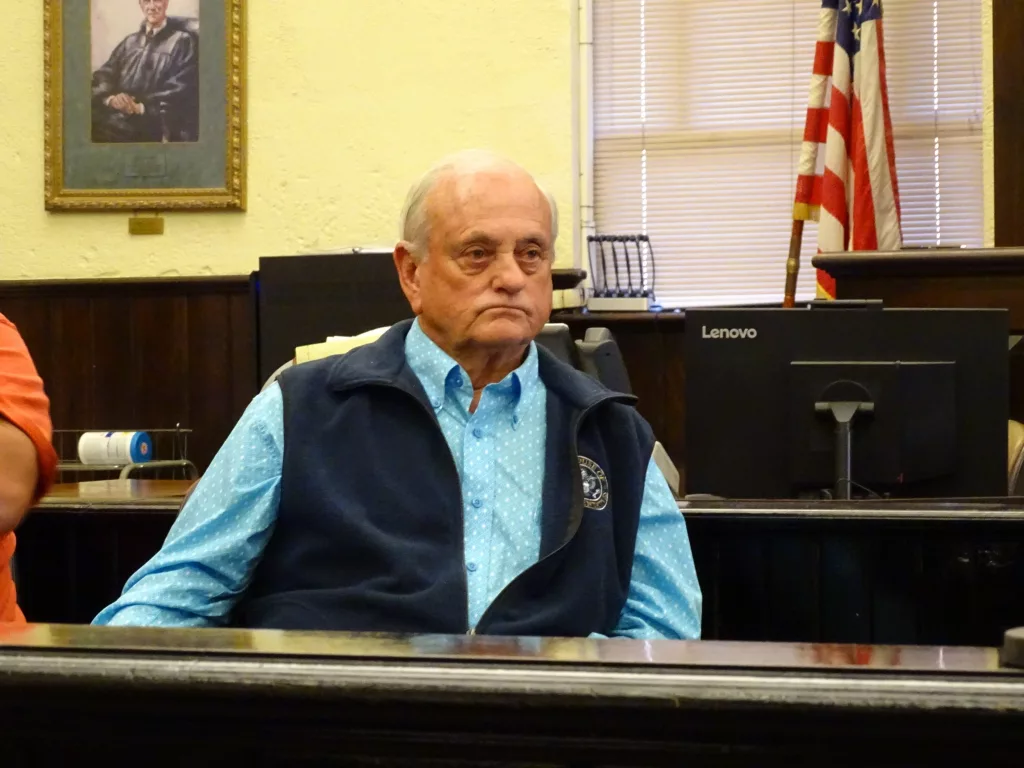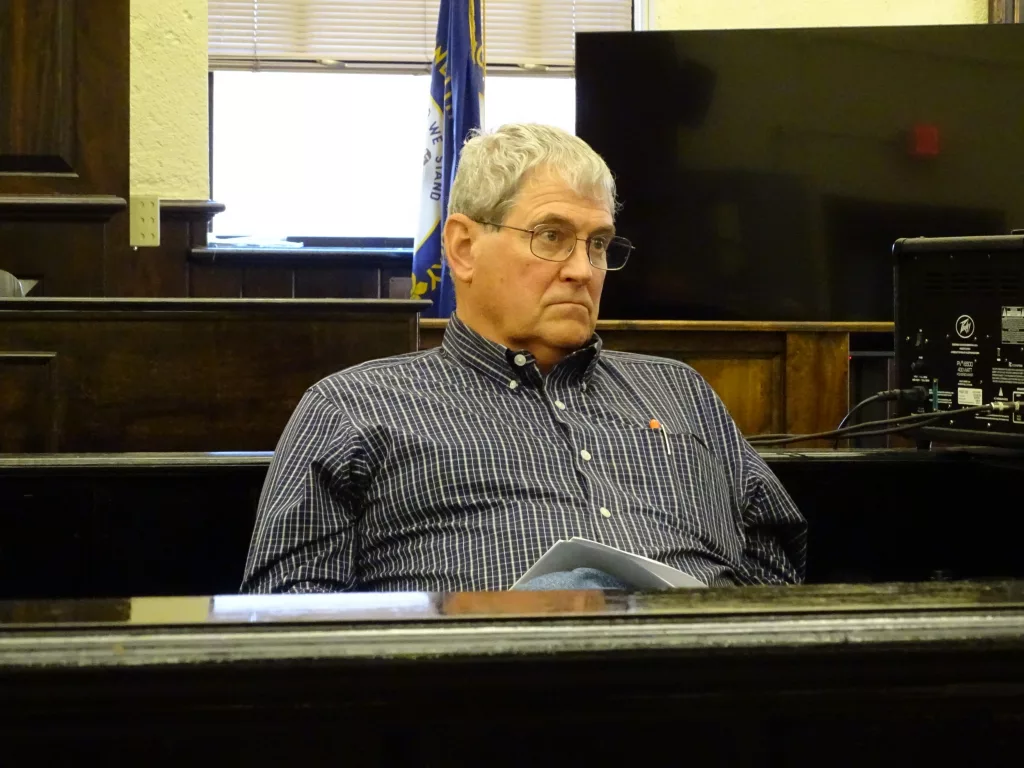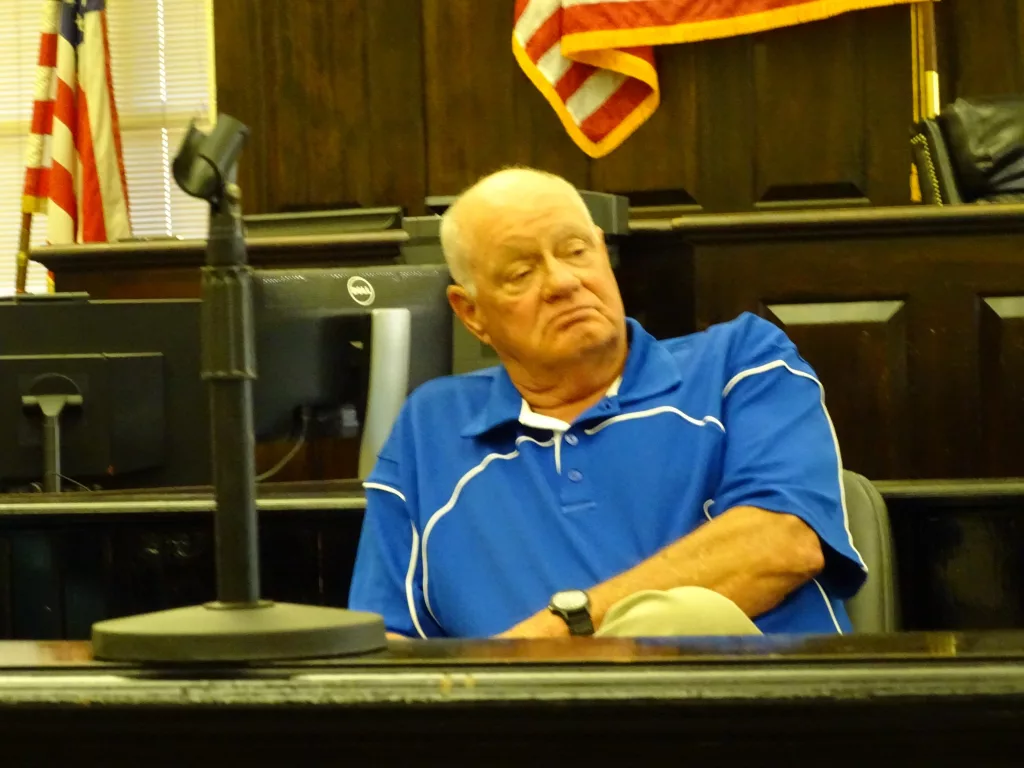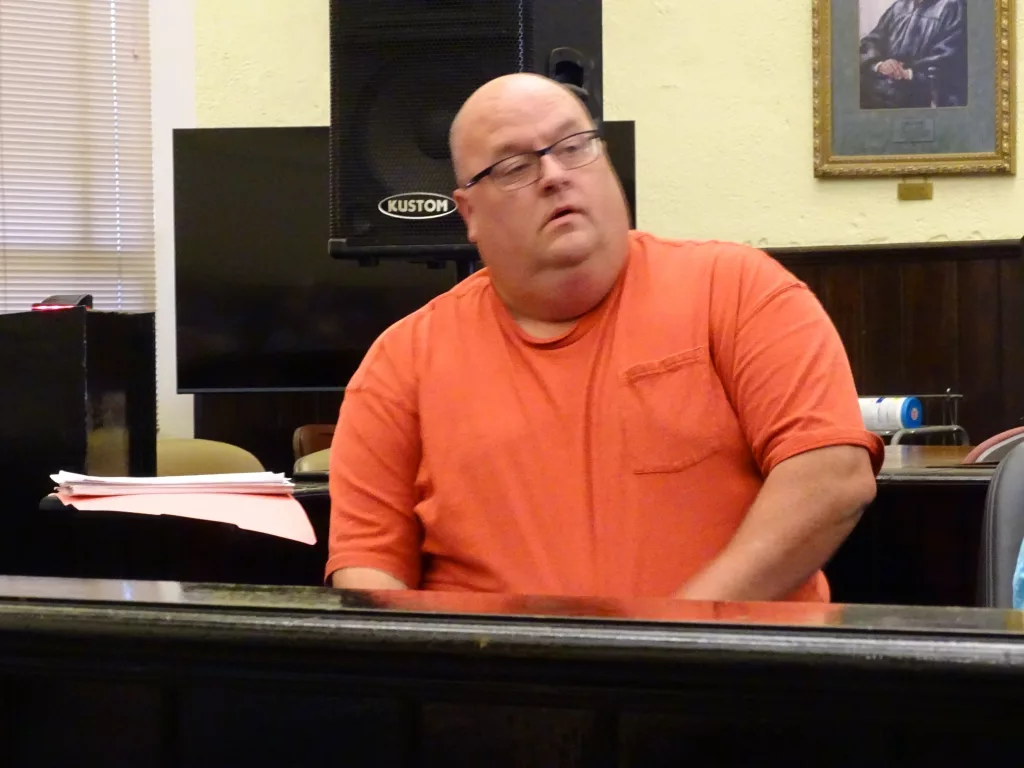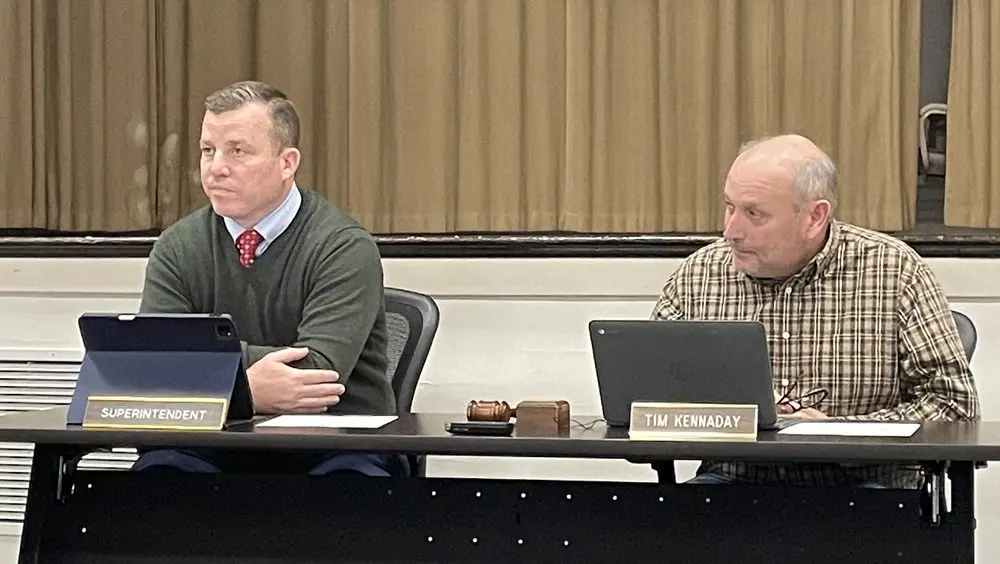

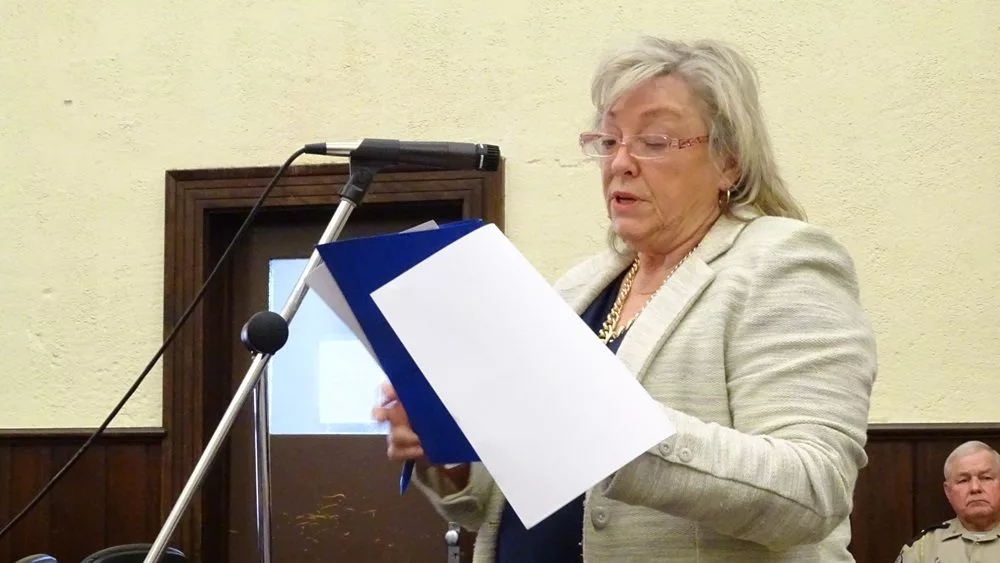
Judge-Executive Kota Young and magistrates convened a public meeting on Thursday night to gather community feedback on the proposed new judicial center project, with the majority of comments expressing support for the project primarily due to the lack of security and safety at the current Caldwell County Courthouse and Annex Building.
Assistant Commonwealth’s Attorney Jill Giordano announced that the 56th Judicial Bar Association held a special meeting this week, and unanimously voted to adopt and publish a resolution and notice of intent regarding the Caldwell County Courthouse and Annex Building, which read in part as follows:
The resolution also addressed the basic components the Princeton Bar Association is requesting to ensure the safety and efficiency of the courthouse.
Giordano, a senior member of the local Bar Association, highlighted several issues on the courthouse’s third floor.
She noted health concerns due to exposed asbestos in uncarpeted areas on the 3rd floor, the poor condition of restrooms and juror rooms, and inadequate security measures, including a metal detector in the courtroom that has never been plugged in.
She also addressed statements that have been made by Young about local taxes.
Judge Brandon Knoth of the 56th Judicial District Division 1 conveyed the unanimous support of all judges in the 56th Judicial Circuit for constructing a new judicial center. He spoke about the construction of the new state-funded $20 million judicial center in Crittenden County that was currently being built and brought a rendering of the courthouse. Knoth emphasized that if Caldwell County declines this project, the opportunity will be allocated elsewhere.
He also shared that if the county declines the opportunity to construct a new judicial center, the Princeton City Council would have the option to vote on the project, but they have a concern about their relationship with the county.
Princeton Code Enforcement Officer Alan Getz inquired about the deadline for signing the Memorandum of Understanding (MOU), to which Judge-Executive Young responded that it is next Friday, May 16. Getz emphasized the importance of seizing this opportunity to enhance the county’s future.
He also questioned how long the county will continue allocating funds to the courthouse in hopes of efficiency and meeting everyone’s expectations.
Attorney Jennifer Nelson wanted to clarify that this project is 100% state-funded, and Caldwell County has a duty to provide a courthouse.
Attorney Linsey Shrewsbury addressed a concern that was mentioned by District 4 Magistrate Jeff Simms about the uncertainty in the bonding mechanisms stated in the MOU if the state decides to default on the debt service at any time.
She also addressed the statements that have been made about taxes being increased on the county’s residents.
Anthony Brown voiced his concerns to Young and the magistrates about what they will do differently for the county’s future that hasn’t been done in the past eight decades.
Attorney Cody Hooks, the son of former Caldwell Circuit Court Clerk Danny Hooks, addressed the landlord and tenant issue about the leaky courthouse roof that was repaired.
He further addressed the significance of the county’s decision.
After Young said during the meeting that Fiscal Court had been aware of the MOU for the $33 million proposed new judicial center since July 2024, Jail Administrator Angela Cotton voiced her thoughts about the timing of the public meeting. She also addressed a comment made by Simms that those in attendance at the meeting were not the only opinions that they have to consider, ”there are 12,000 or 11,000 people that don’t share your enthusiasm.”
She also asked the Fiscal Court how they were going to protect local taxpayers from lawsuits if drugs were brought into an unsecured area on the 3rd floor of the courthouse, and an inmate takes it back to jail.
Several others also shared their support for the proposed judicial center as well as their concerns about the safety of all the staff at the Caldwell County Courthouse and Annex Building during the public hearing, which lasted over three hours.
To listen to the comments from the Fiscal Court and the public, click on the audio link below: