

With the holiday gathering season in the rearview mirror, one illness is particularly on the rise in the United States.
And that’s influenza.
According to several sources, including Reuters and the Center for Disease Control, multiple indicators are showing an increase in illnesses, doctor visits and hospitalizations, and activity has now reached levels not seen in decades.
The CDC has described the 2025–26 flu season as “moderately severe,” and so far, there have been millions of illnesses, tens of thousands of hospitalizations and several thousand deaths.
This dominant Influenza A strain (H3N2), particularly the subclade “K” variant, is driving much of the spread, and this strain isn’t as well matched to this season’s flu vaccine — meaning it spreads efficiently.
Across the country, nearly every state reports elevated flu activity — including Kentucky — with many states in the CDC’s highest tiers of threat.
Hospitalizations and outpatient visits are rising rapidly, and in some places have already set records for this time of year.
Specifically, Kentucky is experiencing high to very high respiratory illness activity, including influenza. Emergency departments in places like Lexington, Bowling Green and Louisville are seeing increased visits for flu, RSV and COVID-19, which makes it sometimes hard to distinguish flu specifically.
Flu, however, is the major driver.
About a week ago, the Kentucky Department for Public Health confirmed the state’s first pediatric flu death of the 2025-26 season in Kenton County. The child was unvaccinated.
Early data points show that respiratory illnesses are currently accounting for about 19% of ER visits and 23% of hospital encounters statewide, and that this “K” variant is circulating widely and spreading faster than some past strains.
Vaccination rates are also lower than expected, reducing population immunity and allowing more transmission — while holiday travel and social mixing helped seed broader spread during late November and December.
Some suggestions:
+ Get vaccinated, even now — as it still helps prevent severe illness, or even death.
+ Practice good hygiene: handwashing, staying home when sick, and avoiding close contact with others can be the difference between isolated cases and outbreaks.
+ If you get flu symptoms and are at high risk, talk to a healthcare provider about antiviral medication early.
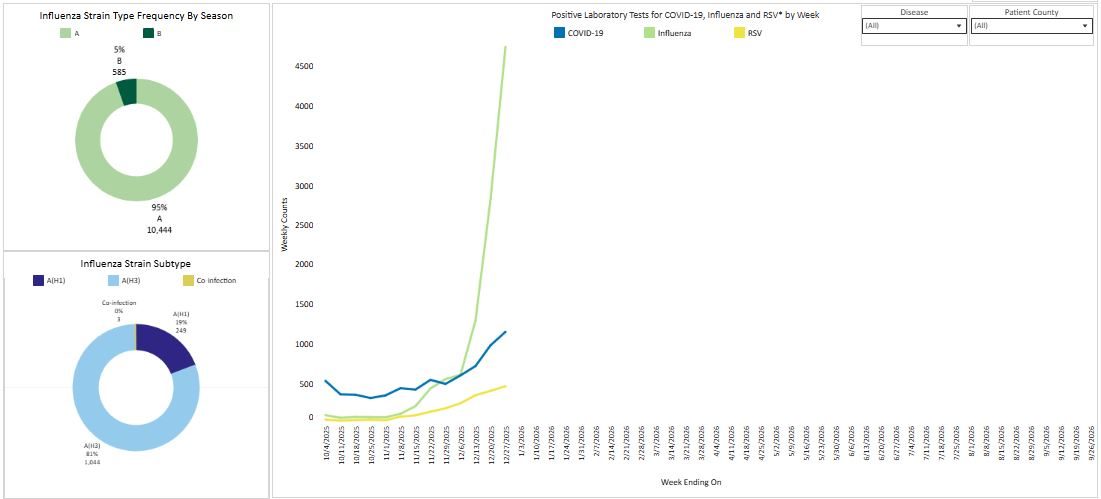
STATE DASHBOARD:
Workbook: DPH RSP 001 Respiratory Diseases