

As of 9 AM Monday, more than 47,000 Kentuckians were without power — following this weekend’s arctic blast across the Commonwealth.
That’s according to Governor Andy Beshear, Kentucky Emergency Management Director Eric Gibson and Kentucky Transportation Cabinet Secretary Jim Gray — who all noted that’s still significant progress from the 74,000 without power at the height of the storm.
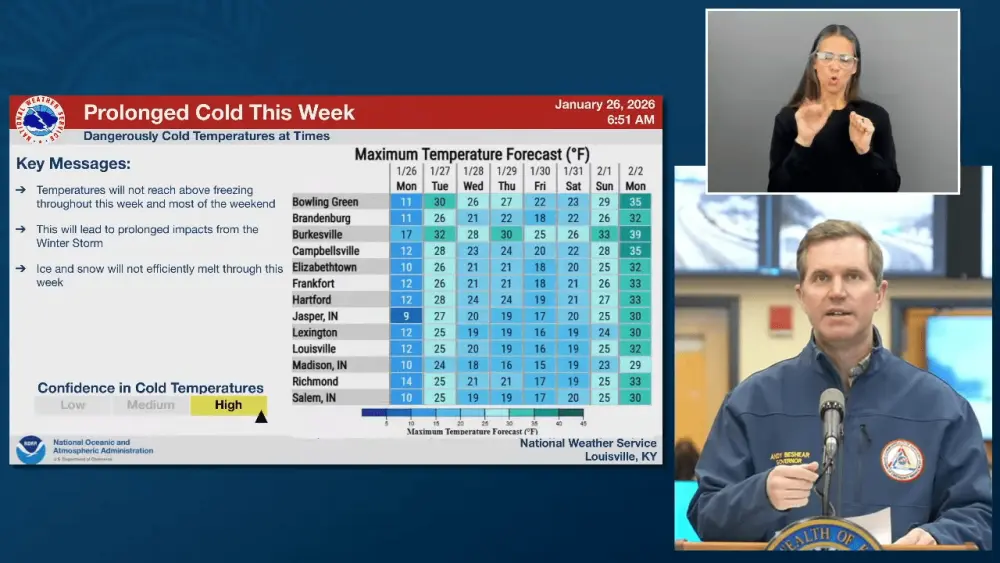
Meanwhile, “non-essential travel,” Beshear said, needs to be extremely limited at least through Tuesday — where temperatures slightly increase, and will allow for state and local road crews to really make headway on the ice, sleet and snow received.
This is Kentucky’s 15th federally-declared weather disaster since 2020, and Beshear said it means state officials and constituents remain unfortunately “well-practiced.”
Gibson said more than 50% of Kentuckians without power right now live in Allen and Monroe counties, who along with Barren and Pulaski counties bore the brunt of higher ice accumulations. In total, the storm delivered up to 12 inches of snow in northern Kentucky, and around 4-to-6 inches in central areas.
More than 130 shelters, Gibson added, remain open across the state.
All 120 counties, Gray said, are experiencing some form of travel impacts.
Beshear said the Kentucky National Guard remains staged at 53 armories, while Kentucky State Police across 16 posts have handled more than 4,900 storm-related calls in the last three days — most of them involving motorist assists and wellness checks on the infirm and elderly.
Hundreds of Kentuckians are currently sheltered in warming centers, and Beshear said there have been some evacuations conducted in London and at Barren River Lake State Resort Park.
Roughly 500 drinking water systems remain under boil water advisories, and several water and wastewater systems operating under limitations.
Those looking to shovel drives over the next two days, Beshear said, should consider some concerns.
A state of emergency remains in effect, activating state resources and price-gouging protections. Federal emergency aid has been approved to support the state’s response, though it does not include individual assistance.
FULL UPDATE: